Western U.S. Paintings
1979-2015

To view available paintings in this collection, click on the button below
“The West began to work on Duesberry’s senses, and soon two important aspects evolved: scale and perspective. The openness of the West and its vastness had an effect on her. Duesberry’s paintings after 1987 show her response, conscious or unconscious, to the space around her. How could it not, when this plein air painter spent days in the sun and arrows of New Mexico and the wind and soft hills near Denver’s Chatfield Dam? It is one thing for a studio painter to work from studies done in the Great Outdoors, but another thing entirely for a plan air painter to stand in front of her easel all day and become part of the environment. Of necessity, the scale of her paintings grew to take in the boundless landscape.”
Ann Daley, 2011
Eastern U.S. Paintings
1972-2015
To view available paintings in this collection, click on the button below
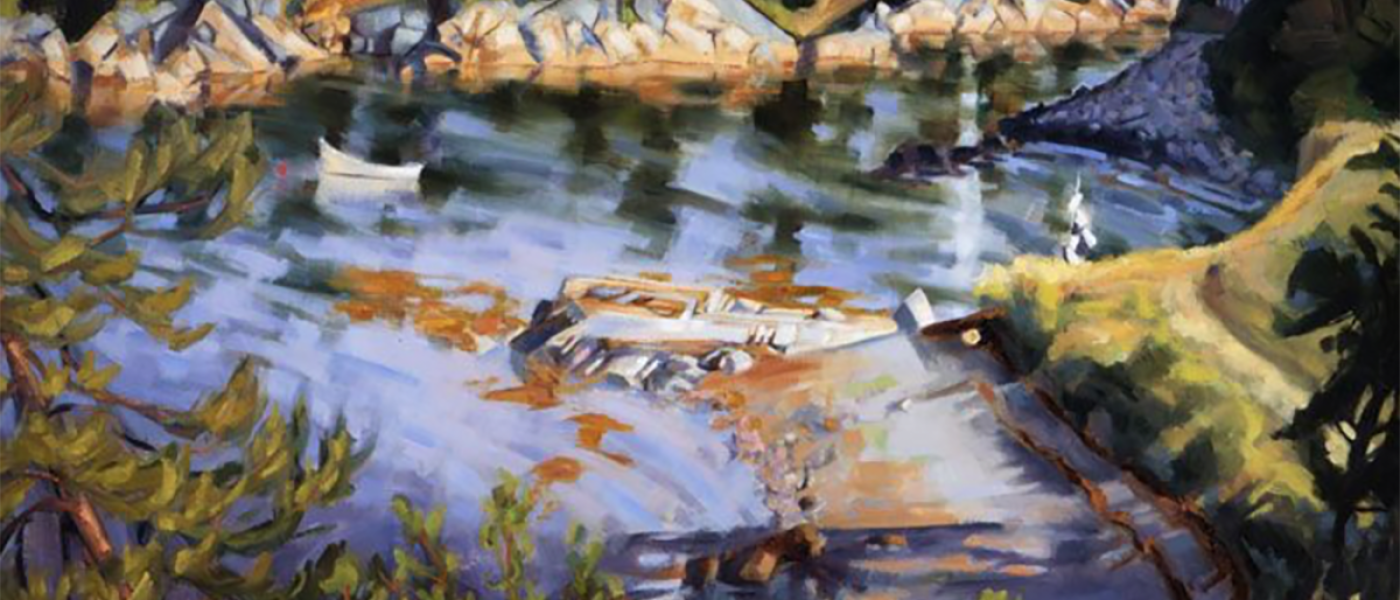
In his landmark book “A Sense of Place: The Artist and the American Land,” Alan Gussow considered the crucial role artists play in helping us appreciate the world. These individual, he wrote, “are blessed with the unique ability to make their places visible, and [are] able, thus, to share with those of us who have not been there what they have learned from their encounters with the land.”
Carl Little, 2011
Joellyn Duesberry is blessed with an ability to make place visible–and memorable–and she has generously shared her encounters with the landscape wherever she has found herself. She has also been committed to specific geographies, returning year after year to record her impressions, and renew and refresh the ties that bind the eye and the heart.
Monotypes, Prints and Works on Paper
1990-2015
To view available paintings in this collection, click on the button below
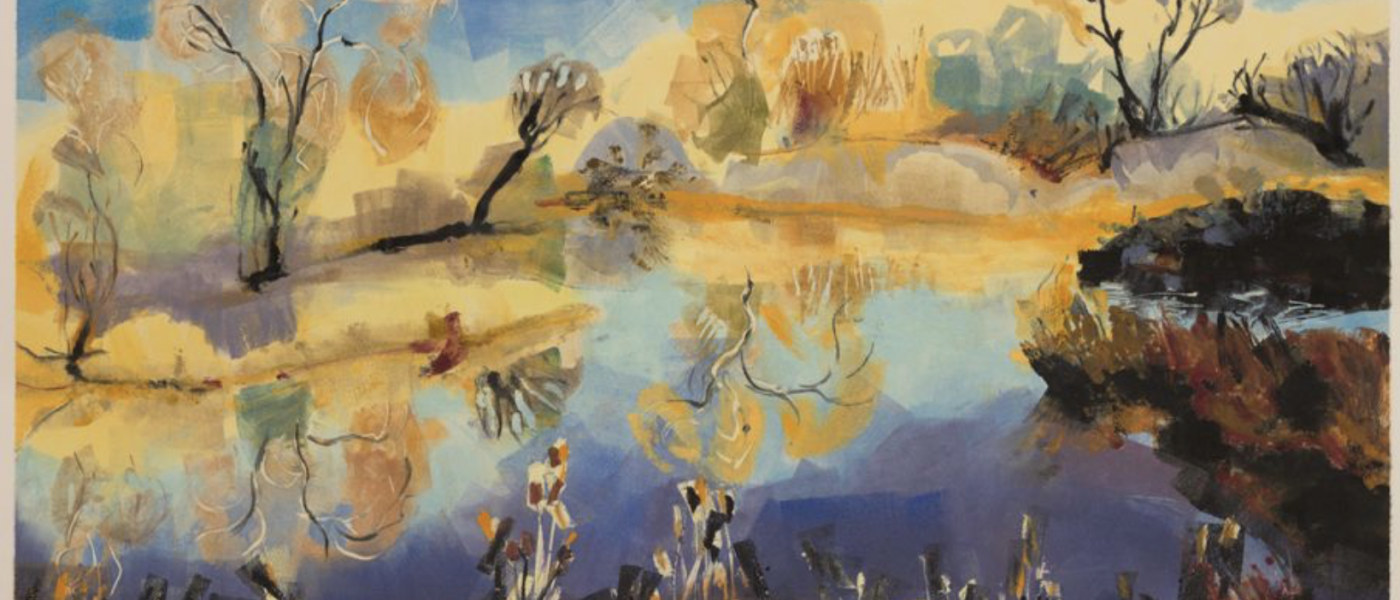
“Diebenkorn offered startling revelations as he worked with me, including the ability to see the “bones” of my painting. He also unburdened me of the notion that I must decorate these bone, these compositional forms I created, with a “skin” of high finish. The message was that there were no rules, except those which posed to him something to “bump up against” in his art. “Artists can do anything,” he said. In the simplest way, he gave me three ideas I embraced thereafter, however unconsciously. First, I could believe forever, as he did, that the abstract and the real are indistinguishable in painting. Second, I could continue the Modernist exploration of all poles of expression without seeming timid…Third, my mysterious need to compose landscapes, from my wide travels…probably lay buried in my unconscious displacement of early childhood bliss and terror onto rural Virginia, where I grew up.”
Joellyn Duesberry, 2011
Richard Dienenkorn also suggested Joellyn try working on the press in monotypes, which she took to with her singular passion and unique aethstetic. According to master printer Mark Lunning, with whom Joellyn work for year, she would use her time on the press to deconstruct and reconfigure the landscape paintings she was contemplating painting later in oil on linen.
Global Paintings
1979 -2014

To view available paintings in this collection, click on the button below
“My sense of place is dictated by landscape. However, I organize a painting by maintaining tension between geometry in depth and geometry on the surface of the canvas. For all of my life in paint, both before and after realizing my search in “virgin territory” was an internal one, I created kindred paintings in France, Italy, Spain, South America, Africa, and Japan. SO compatible with each other were these paintings, that I had to conclude the source of my forms was consonant with unconscious visual memory. Exploring the planes of rural architecture, exotic land, rock, and water forms for the pull of familiar geometries, it becomes obvious through my consistent choices of color and structure that my responses to the world came from deepest memory.”
Joellyn Duesberry, 2011